The lot was surveyed for as new museum beside the Carnegie Institute in Pittsburgh. Andrew Mellon was to locate his lasting tribute in his home city. The museum of old masters would have complimented Carnegie’s collection of “the master’s of tomorrow.” It would also have been an addition to a number of buildings in Pittsburgh that are directly or inderectly in attributed to Mellon including the Koppers Building, Aloca, Mellon Institute, the Mellon Bank Building and later, BNY Mellon tower.
The National gallery of Art website says only that during the 1920s, Mr. Mellon began collecting with the intention of forming a gallery of art for the nation in Washington. But a 1937 story in the New York Times indicates that almost to the end it was not clear the museum would be located in the nation’s capitol, in fact many thought it was to be in Pittsburgh.
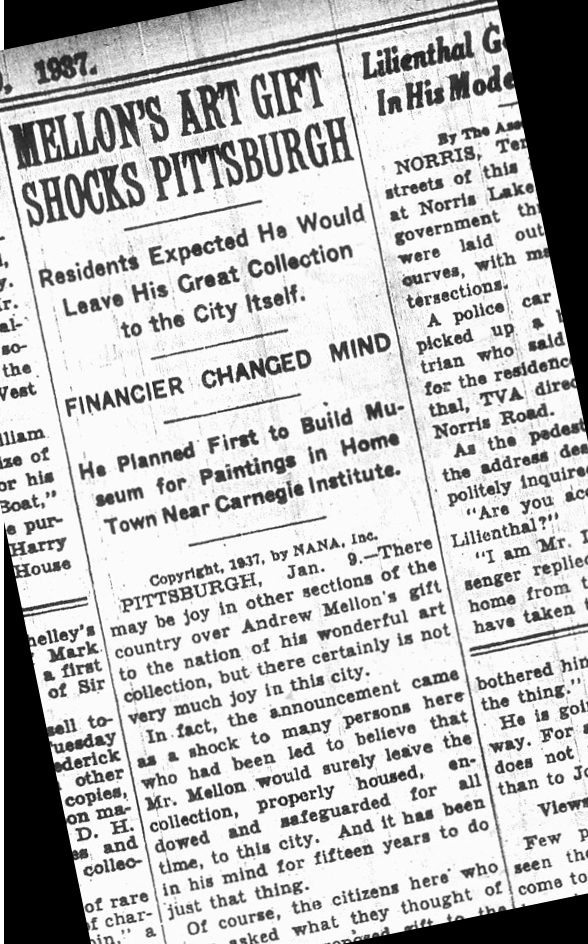
“Mellon’s Art Gift Shocks Pittsburgh,” the headline reads.
There may be joy in other sections of the country over Andrew Mellon’s gift to the nation of his wonderful art collection, but there is certainly not very much joy in this city. In fact, the announcement came as a shock to many persons here who had been led to believe that Mr. Mellon would surely leave the collection, properly housed, endowed and safeguarded for all time, to this city. And it has been in his mind for fifteen years to do just that thing.
No exact reason was given for the change, but the article contends that one thing was for sure, that Mellon likes Washington and would spend the Winter of 1937-’38 there. Seven years before, Mellon was quoted as saying, “If I were given the opportunity to exchange my own period of time for any other, I would choose, without hesitation, the next three quarters of a century and, needless to add, I would live it in America and preferably in Pittsburgh.”
In retrospect, I am sure consensus would be that Mellon made a wise decision. Given the opportunity to provide the nation with a fine art museum is a much bigger statement than a art-filled monument to himself and his legacy in Pittsburgh. One more thing, for Andrew Mellon, the winter of 1937-’38 was not to be. He died in August, 1937, seven months after giving his gift to the nation. Had he delayed that decision, such an article may never have appeared and the collection would be in Pittsburgh.





Leave a comment