Antiques Business

50 Years and Into the Fort Worth Show

Filed in American Art, Antiques, Antiques Business, Art, Texas Art by on March 12, 2013 1 Comment
50 Years and Into the Fort Worth Show

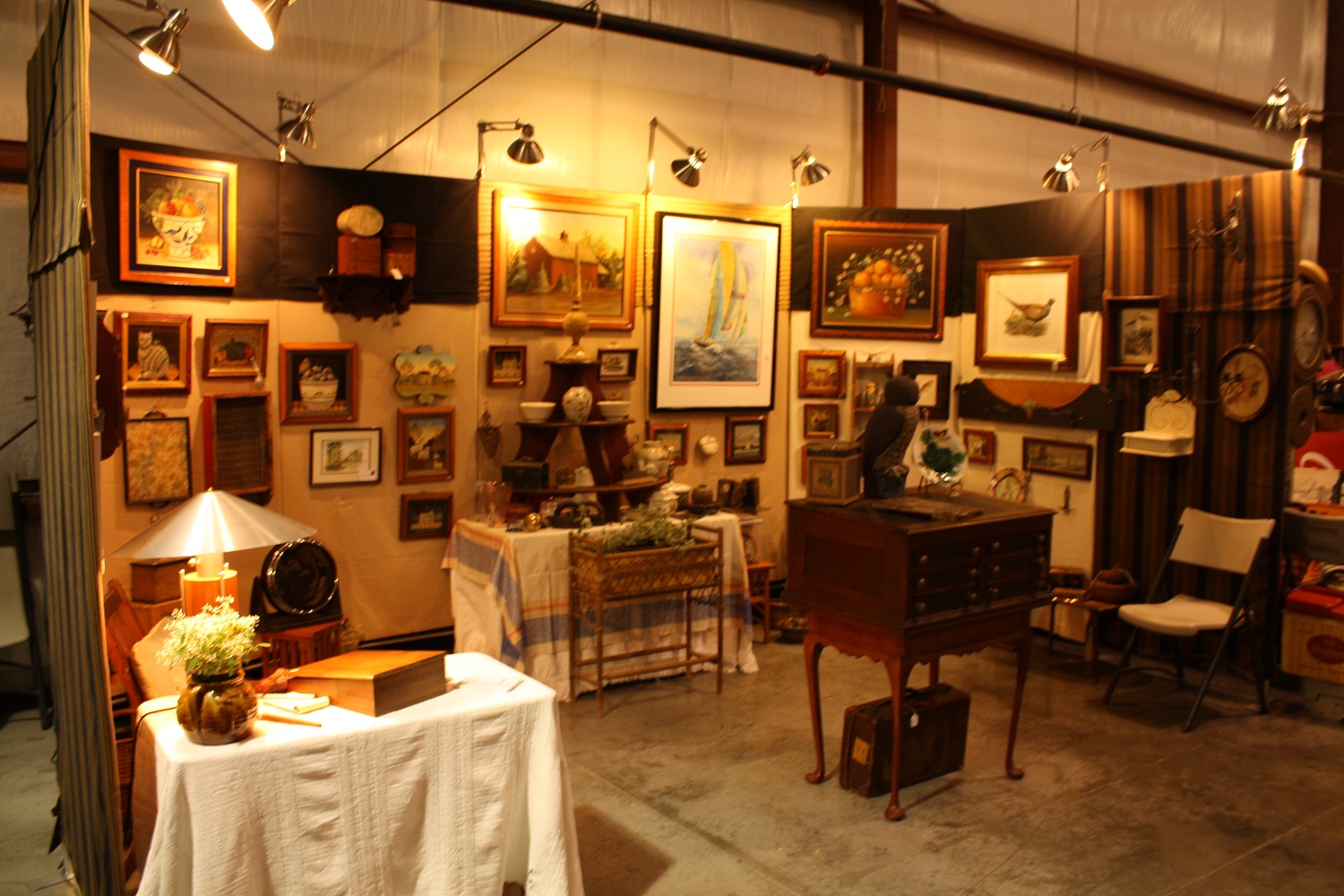
About three years ago, I attended my first antiques show after moving to Texas — the Dolly Johnson Show. Although the show had gone more mid-century and industrial than in previous years, the show stopper then was the Susanna Fuller White trunk, from the Mayflower. Americana was still the heart and soul of the show.

Americana Fort Worth Style

Americana Fort Worth Style

The current owner, Jan Orr-Harter, had the vision of broadening the scope and appeal when she bought the show from JJ Frambes in 2009. Only three years into the show, she has successfully transformed the show into an eclectic market that goes beyond antiques and art. That is prominently reflected by the change in the show’s name: Fort Worth Show of Antiques and Art. Its website is even simpler: FortWorthShow.com.

Broadening the scope and appeal has been a trend among antiques shows. The Philadelphia Antiques Show has adopted a more flexible standard by setting different time windows for different types of objects. For artwork, modernism is welcome as long as the artist is deceased. The Metro Show, which replaced the former American Antiques Show two years ago, took a totally different turn by dropping off its pursuit of patina to incorporate a wider range of objects- the name itself doesn’t convey “antique” at all.

To some extent, the current Fort Worth Show has some characteristics of its predecessor – a penchant for folk art and country craftsmanship. Yet through mixing objects of anti-urbane, un-common or untamed by unconventional training, it has achieved an eccentric sophistication that may shock some long-time patrons but can excite a younger crowd. When we were there on Friday afternoon, the traffic was steady.

Vintage Martini, Fort Worth ShowThis year Ken Weber of Vintage Martini, a clothing retailer, participated in the show for the first time. Together with another first timer, Adrienne Astrologo of Ladybag International from Philadelphia, they represent a desired demographic shift from the show promoter. Risking being called a sexiest, I would argue more or less that men collect, women shop. Collecting American furniture or art is methodological and fastidious. You would trust the voice of Wendell Garrett or the hand-touch of Leigh Keno. Shopping vintage on the other hand is fun, impromptu, and spontaneous. In that case, you would be happy to tag along with Martha Stewart, who visited the Brooklyn Flea a few years ago.

Of course clothing, jewelry and accessories can be collectible but first and foremost on the consumers mind is whether it fits and looks good.

Thus it is the emphasis on the shopping experience (mostly targeted to a female audience) that these vendors would contribute. Given the long history of the Dolly Johnson Show, a more complete transformation, if there is to be one, may not happen this year or next. But the equilibrium will be matched once more vintage dealers settle in.

Otis Dozier at Fort Worth Show

Otis Dozier painting at Fort Worth Show

Yet, even within the spacious Will Rogers Memorial Center, the show is not as big as those super markets such as Scott Market, Brimfield or Marburger. The great advantage of “there is something for everyone” also means that, after dividing the limited space by the extraordinary range of selection, a die-hard collector could find fewer items of interest. Variety vs. homogeneity has always been a conundrum for show promoters. The smaller the show (and while not the largest in the region, this one is on the large side), the bigger the problem.

Dealers have taken the cue themselves in anticipating the shifting interests of patrons. Gordon Harrison of Harrison Gallery, who also exhibited at the Heart of the Country show in Nashville, seemed to bring more affordable art here with modern and regionalism-looking works. They offer unique decorative value without depleting one’s wallet.

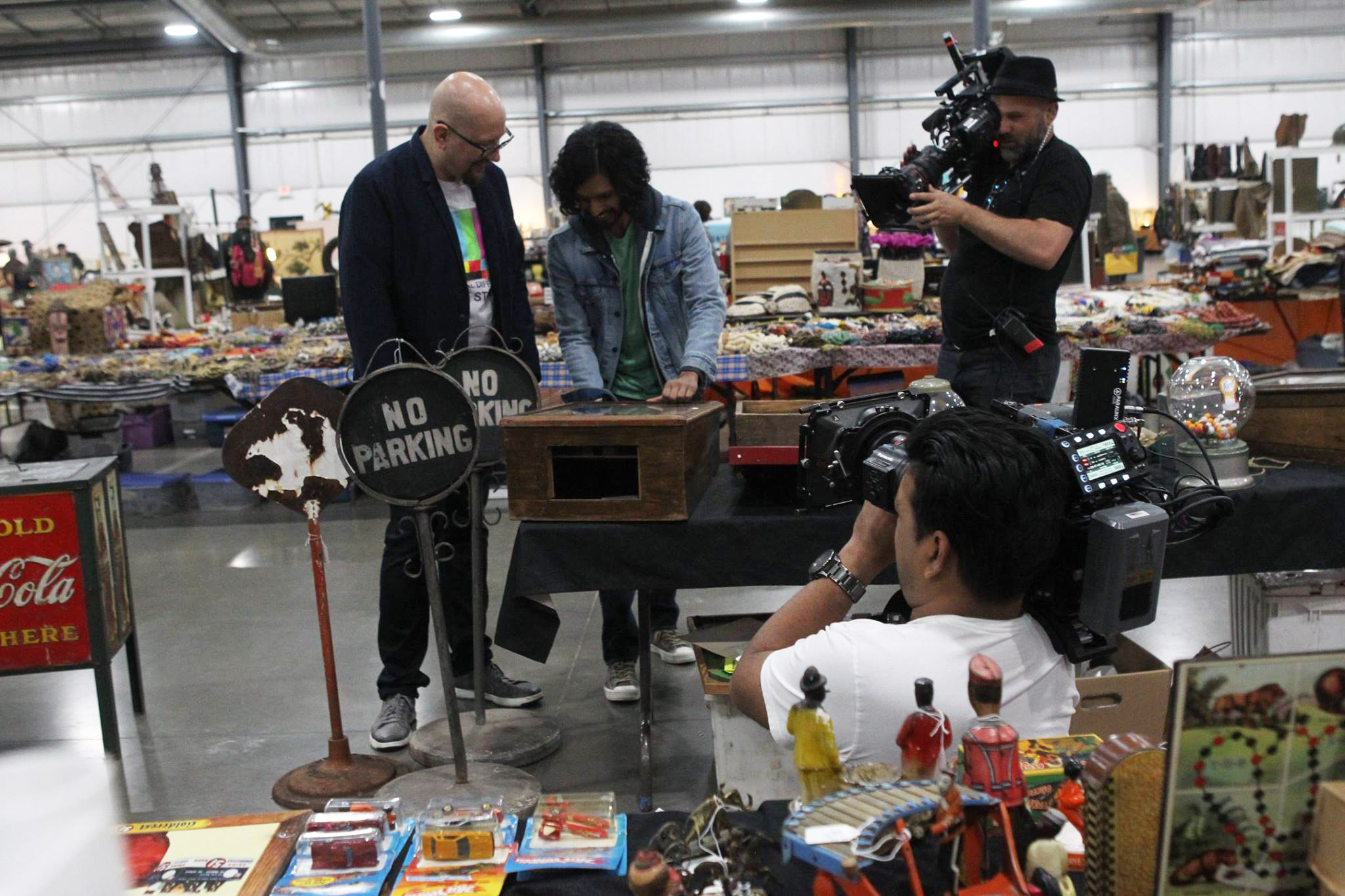
In contrast Jane Christian of Art, brought paintings of Dallas Nine and Fort Worth Circle. Otis Dozier’s work has been recently sold at David Dike Auction for more than $30,000. Although not everyone can afford a large painting by Dozier, the presence of paintings with local interest helps educate Martha Stewart followers who may just browse between vintage Coke signs or Fort Worth hotel memorabilia, and perhaps ignite their interest for, in the words of Amon Carter who founded the museum not far away from the show,  higher attributes of life.

Could TV Show Furnishings Invade American Homes?

Filed in Antiques, Antiques Business, Furniture by on February 11, 2013 0 Comments
Could TV Show Furnishings Invade American Homes?

It occurred to me a while back that perhaps the reason the proliferation of shows on television about antiques have generally coincided with a down market is because of the focus on the price. For them to be appreciated and appreciate, antiques need to be something you want to own, not something you want to sell.

As they should be.

I’ve been wondering for some time whether the tide will turn for some time. Aside from television, many factors are working against it. Boomers are downsizing, meaning the supply is going up and demand going down. Electronic gadgets continue to take up more of our spare time (and so we’re spending more time virtually and less on material objects). More shopping is being done online, which favors new items over old.

But if television can be a style influencer, it could help usher in the return of a more classical, formal style. The big one here is PBS’s Downton Abbey. No, the average person can’t live in a big manor, but formal furnishings are readily available for prices comparable to new items of similar quality. A second show, Netflix’ House of Cards, features American period furnishings like those in Washington buildings. As the economy rebounds, national pride could be on the rise, and so an interest in historical furnishings could increase.

Screen Shot from Gilt Email American Federal StyleThere is some indication this is already happening. Browsing through my email yesterday I opened an email from the online retailer Gilt. A phrase in the subject caught my attention: American Federal Style. These were for the most part not antiques, but new furniture and other items made in styles from the 18th and early 19th century. Included were a three section over-mantle mirror, a high boy, a print of George Washington, plus lots of crystal and silver. Oddly original items offered include period newspapers.

It may be disconcerting if the manufacturers beat the antiques industry to the punch. But wanting the look may be the entry drug into wanting the real thing.

US Antiques Shows Acquires Miami National

Filed in Antiques Business, News by on January 28, 2013 0 Comments
US Antiques Shows Acquires Miami National

Diamonds.net reports U.S. Antique Shows has completed the purchase of  the Miami National Antiques Show & Sale from Dolphin Promotions. U.S. Antiques Shows produces antique jewelry and watch shows in Los Angeles, New York, Las Vegas and Miami. This year the show was held one week prior to the company’s own Original Miami Beach Antique Show. The company says many dealers exhibit at both shows.

Director of Business Development Andrea Canady told reporters that producing both shows will allow us to develop more distinct and comprehensive selling opportunities for dealers, while broadening the reach for each of these two well-established events.

Understated Theta Show Reaffirms Position as Foremost in the South

Filed in American Art, Antiques, Antiques Business, Art by on December 4, 2012 0 Comments
Understated Theta Show Reaffirms Position as Foremost in the South

Theta Show BannerFor some visitors at this year’s Theta Antiques Show, they may be surprised to see changes in the exhibition roster. Some dealers could not make their way from Delaware Antiques Show to Houston in just two days. That opened the door to new faces with unconventional merchandise. Once again Theta proves its prominent status as one of the highest-caliber shows in the South.

Taking I45 from Dallas, we arrived on early afternoon Sunday, just a few hours before the show closed. Many dealers, in fact, have followed the same route a few days earlier after packing up at the Dallas International Art, Antiques and Jewelry Show. Participating shows in two largest metro areas of Texas back to back is convenient for many dealers living afar. When we asked about comparison between the two shows, most dealers confirmed an uptick in the footprints and sales in Houston – It is after-all well-known that Houstonians love shopping.

We did not recall American Garage Gallery from last year. Their booth, filled with Americana, combined understated charm with West Coast coolness. Yet, a 19th century dower chest made in Soap Hollow, Pennsylvania (near Johnstown) was given a prestigious location at the front. Having lived in Pittsburgh for many years, and  having visited the landmark show Made in Pennsylvania: A Folk Art Tradition at the Westmoreland Museum of American Art, we had the chance to tour with Charles Muller, the expert in Soap Hollow painted furniture and learned from a dozen objects in the show. Back in 2007, when he published the book about Jacob Knagy and his furniture making, some dower chests from Soap Hollow had already fetched six-figures in auctions.

We were told that the dower chest was not only illustrated in the book, but also a rare example of its kind: the maker and the year of making are usually signed for Soap Hollow furniture. But this one has also the owner’s name – a genealogy study about the family history will be a must for its new owner. (Not surprising, the dower chest had a red dot next to it by the time we spotted it.) It is a mystery to think how a dower chest from rural areas of Johnstown navigated the country several times including Los Angeles and Houston (this phenomena is sometimes lost of the contemporary use and over-use of the word green).

A Coca-Cola architectural fragment was another interesting object from the same dealer. Taken from the cornerstone of the Milwaukee, Wisconsin Bottling plant, the iconic bottle in cast concrete looked exceptionally lively with the upward wings. The increasingly negative public opinion, with New York’s mayor Michael Bloomberg in particular associating soft drinks with obesity, seemed non-traceable and irreverent in front of such an iconic object: it reminded everyone it has been popular since its birth more than one century ago – a feat that no other brand has equally achieved.

Ted Fuehr of American Spirit AntiquesThere was generally good feedback from dealers. Here and there, I could see sold labels next to furniture. My guess was that furniture delivery tended to be made at the end of the show so that those red dots were easier to be spotted. Whitehall Antiques sold a sideboard with curved front cabinets and a slant front desk. Both were of mahogany and from England. Ted Fuehr of American Spirit Antiques was also pleased to see a much lighter truck load back home.

Ted also brought a few weathervanes of different subjects. Placed on top of tiger maple surface, they looked stunning fresh. Although many folk art subjects such as roosters, cows and horses have been dominating the higher-end weathervane market, Ted showed two sailboats weathervanes. Stacked with triangles of different orientations and thickness, the sailboats weathervanes are more architecturally decorative than naively whimsical of the animal forms.

“There are some great opportunities in the medium range market now for decorative art,” attested by a dealer who offered a stunning sterling sofa made in India. It was actually quite comfortable to sit on — such sofa made in 20th century has better ergonomics than earlier ones (especially those with a horizontal crest to keep sitters from slouching back). I could almost hear Joan Rivers’ comment in her documentary: “This is how Marie Antoinette would have lived if she had had money.”

Having attended two shows of similar size within a week, we have seen two different styles. The Dallas show emphasized on high-end and luxury: Bathed in bright light and floored with beige carpet, it had that celebrity glamour affecting both patrons and vendors. Theta Show was less extravagant. (The live piano was gone this year.) It had a much casual and relaxed atmosphere. Besides the look, Dallas Show has a much bigger presence of jewelry dealers. In comparison, only two dealers in the Theta show displayed predominantly jewelry. The presence of jewelry may broaden the demographic of the clientelr, however a ready abundance conspicuously exalts tasteful consumption and ridicules the pursuit of patina and subtlety in decorative art and fine art.

Industry Word Pulse Survey Indicates Favorable View of Antiques

Filed in Antiques Business by on November 28, 2012 9 Comments
Industry Word Pulse Survey Indicates Favorable View of Antiques

With all the talk of a decline in popularity of antiques, you might expect a much worse showing. Yet with more than 100 votes, the term rank near the most favorable industry words in a survey among readers of Urban Art and Antiques.

With more than 100 responses, the word “antiques” has a 70 percent favorability rating, the third most of any term ranked. Another 15 percent of respondents have a neutral response to it. Just ahead of it is the word “vintage” with 77 percent giving it a favorable rating. “Shop Local” is also a popular term with 74 percent rating it as favorable, as is “repurposing” also with a 70 percent favorable rating.

Take the survey

Other terms with strong favorables include “vintage shows,” “smalls,” “patina,” “furniture” and “collecting.”

Terms weighed heavily to the negative include “small shows,” “exclusive,” “contemporary,” “important,” “investment” and “modern.”

While the word “antiques” may be favorable, it appears the word “antiques show” barely made it past the median mark with just 51 percent giving it a favorable rating. “Flea market” fared the same.

The survey is designed to give an indication of the popularity over time and so will not end. Users can add one to three word terms for readers to rank.

Flea Market Sculpture Tops $20K at Auction

If you’ve ever stood in a flea market and wondered what you were looking at, it might be a lot of money. Found at a Flea Market in Philadelphia for $200, a unique sculpture commissioned by Tiffany & Co. from one of the world’s foremost living silversmiths floored a standing-room only auction Tuesday at Freeman’s by climbing to an astounding $22,500.

Modernist sterling silver Cassini centerpiece   design: charles o. perry (1929-2011), ubaldo vitali (b. 1944) for tiffany & co., ny   Spherical design, composed of intersecting, folded cylindrical forms.   H: 9 1/2 in. Diam: 9 1/2 in. Weight: 80 troy oz.

Modernist sterling silver Cassini centerpiece
design: charles o. perry (1929-2011), ubaldo vitali (b. 1944) for tiffany & co., ny
Spherical design, composed of intersecting, folded cylindrical forms.
H: 9 1/2 in. Diam: 9 1/2 in. Weight: 80 troy oz.

The seller who first found it hiding inconspicuously amidst a pile junk on a flea market table was in shock. Initially, he’d had no idea what it was. Nor could anyone tell him. He’d just liked it for what it was–a beautiful abstract composition of swirling bands. Even so, at the time, $200 seemed a lot to pony up.

What emerged after polishing was a thing of beauty. And, more importantly, the faint impression of the initials “UV” emerged, in what he suspected–and indeed proved to be–a maker’s mark. It was a clue, but still all his efforts to identify it came to naught. That’s when he decided to bring it in to Freeman’s Auction in downtown Philadelphia for a complimentary assessment.

Freeman’s Silver specialist David Walker, who greeted him, had never seen anything like it, although he immediately recognized the quality of the piece. The good news that day was that it was solid sterling and not plate, as its discoverer had believed. It was then and there agreed that he would consign it to Freeman’s for sale to the highest bidder.

For one specialist at Freeman’s, however, that was only the beginning. Whitney Bounty in the American Furniture and Decorative Arts Department made it her personal mission to identify this piece and she spent many months following up on all leads. Once she identified it as having come from Tiffany & Co., still the elusive maker’s mark “UV” continued to haunt her. In time, the truth emerged from one of her many sources, and soon after a call came from the son of the very man whose design it was–internationally renowned architect, industrial designer, and sculptor Charles O. Perry (1929-2011)… And he told her all about it.

The piece is one of only six known examples of the design, commissioned by Tiffany & Co., which Perry titled Cassini after the Italian astronomer who inspired him, Giovanni Domenico Cassini (1625-1712). Cassini believed that a planetary orbit could be along the intersection of a cylinder with a sphere. The composition this idea inspired was hailed a triumph. Large scale, steel versions of the Cassini sculpture are installed at the Civic Arts Complex in Ringwood, Australia; in East Moline, Illinois; and in a few private collections around the world.

“UV” is the mark of Ubaldo Vitali (b. 1944), among the greatest of 20th-century silversmiths. The man whose hands formed this piece is renowned as a master of his trade and is featured in multiple museum collections and exhibitions. Vitali is a fourth generation silversmith, who stamps his pieces with the hallmark once used by his father and grandfather. Having done work for Tiffany, Cartier, Movado, Bulgari and Steuben, he is in very high demand.

Under the Splendid Look — Visiting Dallas International Art, Antiques & Jewelry Show

Filed in Antiques, Antiques Business by on November 12, 2012 0 Comments

Dallas International Art, Antique and Jewelry ShowTrading in for a better location, the Dallas International Art, Antiques & Jewelry Show has moved back to the city. Although Market Hall cannot compete with the Irving Convention Center in terms of the facility quality, the show organizers have transformed the hall into a magnificent space – plush light-gray colored carpet throughout, custom walls (covered in felt or paper) and ample lighting. One long-time local resident commented: in its more than half a century history, the Market Hall has never looked as splendid as it did this weekend.

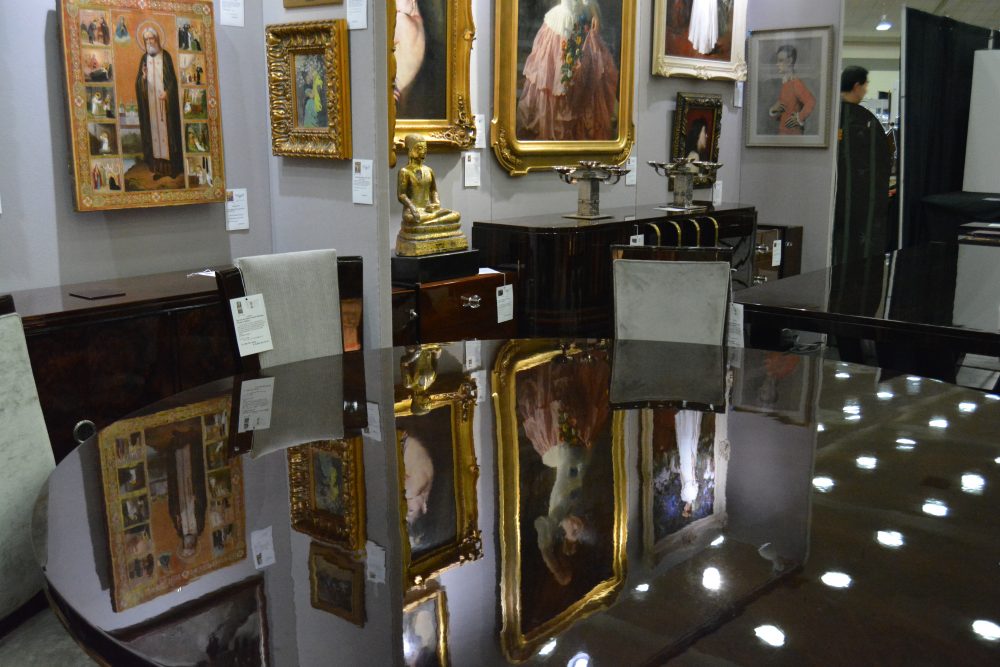
The space marked out for the show accommodated more than 60 dealers from around the world. The word “international” is also reflected in the merchandise. Perhaps in an effort to match  local tastes, European art and decorative art dominate the show. Collectors of 19th century American art and Americana may find comfort in the booths of Alexander Gallery and Roberto Freitas’. A portrait of a boy with his pet pigeon by Henry Benbridge has the delicate youthfulness, despite Benbridge’s tendency of delineating dark shadows with enamel-like highlights. Isaac Sheffield was a lesser known itinerant painter. However, his portrait of young Charles Mallory from Roberto Freitas has an interesting history with Mystic, Connecticut. The young man would eventually build a shipbuilding empire — Mallory shipyard.

Dallas International Art, Antique and Jewelry Show Red WallsYet often the history of a Yankees’ north resonates little with Dallas patrons. Glittering under warm spotlight, the hall has adopted that Dallas look, and it can be about the look as much as the thing itself. The expense on Market Hall’s extreme make-over is well spent – no one would deny the feeling of walking onto red carpet. Nor would we forget the stunning first sight of aisles of suffused light, framed under the draped canopy of black ribbons at the door. But the core of a show is the objects.

Dallas International Art, Antique and Jewelry Show Red BlueThere are some big names here and top quality objects, but the river doesn’t always run so deep. Some dealers like Paul Vandekar of Knightsbridge Inc. offer quality objects in a variety of price points and in quantity, but many  booths have limited objects. This is sometimes good for conveying a sense of scarcity and opulence, but not necessarily for shopping.

Sometimes when you ask a dealer how a show is, whether good or bad, you get an honest answer. One of the dealers expressed such dismay he wished for some paint he could watch dry. If he looked around, he may find some. The word “art” appears in the show title before “antique” and a few canvases appear relatively fresh from the easel. Contemporary art that looks traditional is a risky proposition. Some do it very well, like Colm Rowan Fine Art, a dealer offering pieces by Ken Hamilton that look like old Dutch portraits.

They are the exception.

Some present the best, and seem to do everything well.

Like last year, M.S. Rau gallery 0ccupied premium show real estate. Paintings by big names are hung with enough breathing space, like a museum exhibition. The large labels above paintings announce their importance to visitors – If you cannot read the art, at least you can’t miss the banners. With their vast inventory, they effortlessly create ambiance of opulent living-without making the booth seem sparse. My favorite was a set of Biedermeier mahogany chairs with paired swan backs and lion paw feet. The gilded and polychromed swans are carved with subtle depths and stylized dynamics as if they are about to rise up from the pond and fly away. Biedermeier, or in general, empire furniture, often emphasizes grandeur. Yet with the open back and liveliness of birds at the same time they look airy and buoyant.

One addition to this year’s show are designer showcases meant to exemplify how antiques integrate into today’s lifestyles. Had the designers taken the cues from M. S. Rau’s gallery, the showrooms would have been more coherent and visually pleasing. Earlier this year, at the Philadelphia Antiques Show, we were impressed by a set of showrooms, each with specific themes and styles. Here, however, the bright red (I’m not sure whose lifestyle can be integrated into that color) is adopted across every showroom. The color is so piercing that a snow scene painting by Arthur Clifton Goodwin (State Capitol in Boston) looks more like subdued wall paper. Nor are the proportions and styles of objects are consistent throughout the show rooms. The effect — a kaleidoscopic display of what is offered in the floor — is, to rephrase Rachel “Bunny” Lowe Lambert Lloyd Mellon’s words, nothing could be noticed (except the red wall).

Dallas International Art Antique and Jewelry Show CarLike many in Dallas, I am happy the show continues. This is the third edition and Market Hall is the third location for the show. Many dealers we spoke to liked the new location. However from discussion and observation, the attendance doesn’t seem to have improved markably. The Dallas metro is the fourth largest in the country and should be able to support a show like this. It may be a case of trying too hard, however and it could be held back by existing ideas of what Dallas is (it may not be as traditional as we sometimes assume). The promoter, the Palm Beach Show Group, also produced the Baltimore Antiques Show, which offers a greater array of dealers and price points. The brighter show with more of a mix of antique and contemporary, like New York’s Metro Show, may also have some appeal.

The show has a good foundation of reputable dealers that can carry it forward, and I do hope, with some tweaking, it will continue.

Court Decision Could Prohibit Sales of Some Second-Hand Merchandise

Filed in Antiques Business, News by on October 17, 2012 0 Comments
Court Decision Could Prohibit Sales of Some Second-Hand Merchandise

In the future you may be prevented from reselling goods made outside the U.S. once you purchase them. The Wall Street Journal reports that the Supreme Court will soon hear a case that could have a severe impact on the antiques industry. Currently copyright law allows you to resell copyrighted items without getting permission from the copyright holder. That could change if the Supreme Court upholds lower court rulings in Kirtsaeng v. John Wiley & Sons. If that happens, consumers would need permission from copyright holders to resell items made outside U.S. borders. Everything from antiques to iphones could be impacted. The Court is scheduled to hear oral arguments later this month.

Antiques Roadshow Vintage Shows Declining Values

Filed in Antiques, Antiques Business by on July 24, 2012 2 Comments
Antiques Roadshow Vintage Shows Declining Values

Richard Croft [CC-BY-SA-2.0 (http://creativecommons.org/licenses/by-sa/2.0)], via Wikimedia CommonsThe old saying goes, buy something foremost because you like it. That’s because appreciation is rarely a sure thing. A look back at episodes of Antiques Roadshow since 1997 in fact show that since then lots of classic antiques have only lost value. The look back reveals that in some episode instances over the past 15 years, more values have gone down than up. A look specifically at a San Francisco episode showed the majority of items featured on the show had gone down in value. Not everything went down in value of course, and some items gained significantly. Notions of appreciation and are less likely to be at the forefront, however. This jives with the results of our own ongoing survey which shows attributes of “investment” and “appreciation” getting low positive scores.

Watch a look back at Vintage Pittsburgh.

Furniture Market Still Down

Filed in Antiques, Antiques Business, Furniture by on June 20, 2012 0 Comments

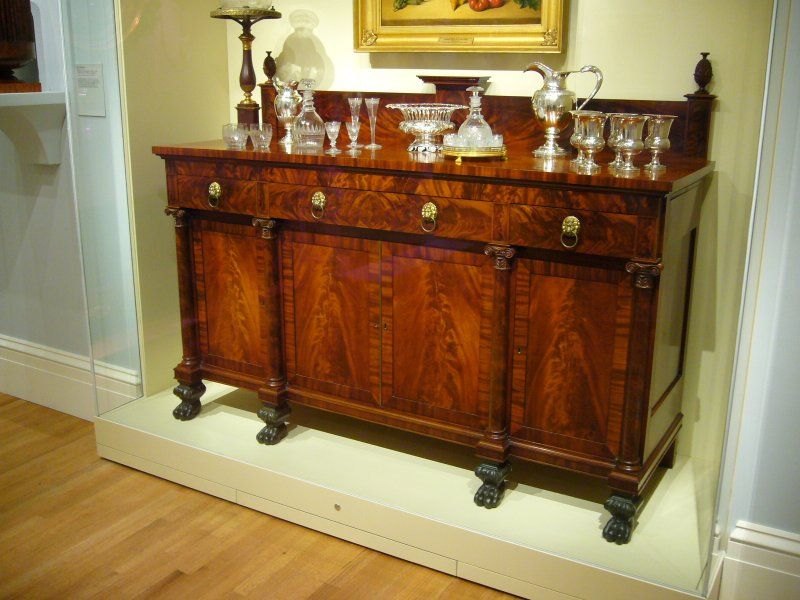
Furniture MarketOnce the staple of antiques shows, its hard to find an array of furniture today. While there have been some incidental reports of a pick-up in sales, its likely the second-hand and antique furniture markets will continue to mimic the furniture industry. There, even as housing rebounds, sales and stocks are way off.

A recent article on CNBC notes companies including La-Z-Boy and Ethan Allen are off big from their highs. While permits for new construction recently hit their highest level in four years, the article suggests that perhaps that its more speculation driving the recovery. Continue Reading »