Tag: Newark Museum
When Pots Became Art – Newark Museum Displays 100 Masterpieces
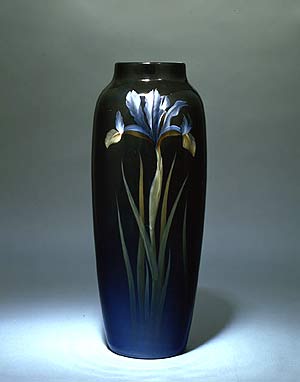
All of this came together, in the United States at least, at the national Centennial Exhibition in Philadelphia in 1876. That moment was a cultural watershed for America, a moment that unleashed something of an aesthetic awakening. It was in the aftermath of the Centennial that Americans began to see the potential for transforming ceramics from merely ornaments into art objects. In shape, in glaze, in surface treatment, pots could be more than just pots.
There are many styles included among the objects in this exhibition and a wide range of production techniques, each of them reflecting what was considered artistic at the time they were made. Some of these pots are Victorian in their aesthetic, others Art Nouveau, and some could be called Modern. Our goal has been to embrace an idea, not a particular taste, to corral a diverse group of ceramic objects and to shed light on what connects them.
This exhibition is the “prequel” to the 2003 exhibition Great Pots: Contemporary Ceramics from Function to Fantasy, which focused on the Museum’s striking collection of studio pottery.
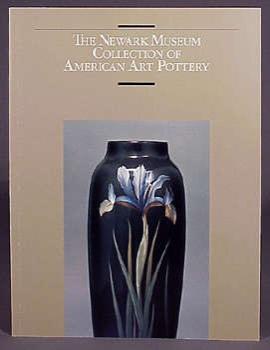
A 120-page full-color catalogue accompanies the exhibition, and can be purchased along with the previous catalogue Great Pots. The exhibition runs from Sept 23, 2009 to Jan 10, 2010.
100 Masterpieces of Art Pottery, 1880 – 1930
From the press release of Newark Museum
The Newark Museum art pottery collection began with an exhibition in 1910, just one year after the institution was founded by John Cotton Dana, and since has grown to be one of the country’s premier holdings. Exhibited as a collection only twice in the past 25 years, in 1984 and 1994, the Museum honors its Centennial with a remarkable exhibition, 100 Masterpieces of Art Pottery, 1880-1930, opening September 23 and running through January 10, 2010.
The Newark Museum’s art pottery collection began with Dana’s pioneering recognition of ceramics as an art form 100 years ago and continued with acquisitions of modern ceramics throughout the 20th century. According to Director Mary Sue Sweeney Price, “Newark was one of the first museums, if not the first, to see ceramics as art in the way painting and sculpture were seen by other museums.”
According to Ulysses Grant Dietz, Senior Curator and Curator of Decorative Arts, “John Cotton Dana also envisioned art pottery as a way to involve ordinary people with art; a way to draw them into his fledgling museum and into his library. He was very interested in the potential mass market that could be reached by art pottery in a way they could not be reached by paintings.”
“Informing and involving ordinary people in the wonders of the world of art continues to this day – 100 years later – to be his legacy and the central theme of the Newark Museum’s mission,” Dietz said.
“One hundred years ago, pots were art,” said Dietz. “The vase was the ideal art object because, while still ‘functional,’ it could be set aside and admired purely for its beauty and the skill with which it was created. Artistic pots were also more accessible to the general public than paintings and sculpture, and thus were the perfect kind of art for the newly-founded Newark Museum in 1909,” he explained.
100 Masterpieces will track the notion of ceramics as art from the Gilded Age of the 1880s to its evolution into studio pottery by the outset of the Great Depression. The Newark Museum’s collection of modern ceramics was begun in 1910 with an exhibition entitled simply Modern American Pottery. The centennial project will feature more than 100 pieces of pottery and porcelain, including American and Native American as well as European and Asian ceramics. The exhibition will be entirely drawn from the Museum’s own collection, with the exception of two loans from the American Decorative Arts 1900 Foundation, according to Dietz.
The “birth” of art pottery was part of the larger arts and crafts movement born in England in the 1860s. In the United States art pottery was hugely influenced by the Centennial Exhibition in Philadelphia in 1876, and the ensuing American embrace of such diverse aesthetic notions as Japanism and the Colonial Revival. William DeMorgan (1839-1917) in London and John Bennett in New York City were among the best known figures to explore pottery as art in the 1870s and 1880s, with painterly designs that romantically evoked the Middle Ages and the exotic East. Maria Longworth Nichols, a society lady from Cincinnati, brought art pottery into the American mainstream in the wake of the national Centennial, imbuing her Rookwood Pottery’s output with romanticized Japanism combined with French slip-decorating techniques.
As the nineteenth century came to a close, art pottery split into two distinct camps—the china painters and art potters. Decorated porcelains continued to play a major role in the world of artistic ceramics during the later Gilded Age, continuing a factory-based tradition with roots in the eighteenth century. Royal Worcester in England and Trenton’s Ceramic Art Company were key players in this camp. Art potteries, conceived as small scale cooperative business ventures with a distinct division of labor, capitalized on arts and crafts ideals of handcraft and design. Ceramic decorating, which was a genteel hobby for well-to-do women, was at the same time a viable career path for both men and women in this period.
“Within the realm of art pottery, a further three-way subdivision produced artwares that were either focused on minimalist forms with remarkable, beautiful glazes; or on the sculptural aspects of pottery as a three-dimensional form; or on the notion of the vessel as a canvas to be filled by an artist, emphasizing painterly effects,” Dietz said. These approaches would continue to inform the art pottery world even as it moved from the Art Nouveau to Modernism in the 1920s and began to evolve into the studio pottery movement of the post-Depression years.
“100 Masterpieces of Art Pottery, 1880-1930” will be exhibited at Newark Museum from September 23, 2009 through January 10, 2010.
Newark Museum Celebrates its 100th Anniversary

Newark Museum and Ballantine House
The Newark Museum will celebrate its 100-hour Centennial Celebration Marathon, a multi-cultural extravaganza offered, round-the-clock, from 10:30 a.m. on April 22 to 6:00 p.m. on April 26.
The imaginative programs planned for the Centennial Celebration include demonstrations and workshops in art forms from quilting and pottery; armchair talks with members of the Museum’s distinguished curatorial staff and other scholars; dance lessons and then the opportunity to use what you’ve learned at Motown, Salsa and Swing dance parties; a 100 Amazing Object treasure hunt through the Museum’s 80 galleries from the permanent collection; exciting planetarium experiences, and multicultural, multi-ethnic performing arts presentations by professional musicians and dancers.
A community birthday party will conclude the 100-hour marathon on Sunday, April 26, complete with a birthday cake, special musical performances by Dr. K’s Motown Revue, and dancing in the garden. The Newark Museum was founded in April, 1909, by John Cotton Dana, Director of the Newark Library. A national revolutionizing influence on both librarianship and museums, Dana’s intense interest in contemporary American art, at a time when other museums were concentrating on European masters, resulted in an important core collection of 19th and early 20th century works. That interest is reflected today in the Museum’s Collection of American art, considered one of the finest in the country.
The initial art exhibition for the Centennial, Unbounded: New Art for a New Century, opened in February and will run through August 16. The exhibition highlights the Newark Museum’s expansive and global approach to contemporary art by creating unexpected connections or groupings that transcend traditional divisions based on geography, genre or media. All the works are from the Museum’s permanent collection.
The first of a series of site-specific, single-artist Centennial commissions, InsectaFantasia has been installed in the historic Ballantine House and has received critical praise. The installation will remain on view through June 14.
For a complete calendar of marathon activities and centennial celebration exhibitions, visit newarkmuseum.org or call 973-596-6550.
Buy The Case, Return The Pearl
Mai Du Huan Zhu is a famous story in China. A man of the State of Chu went to the State of Zheng to sell his pearl. He had made a case for the pearl with fine grained magnolia wood, fumigated it with incense, mounted it with white jade, adorned it with rose-colored stone and sewed green jadeite onto its fringes. The craftsmanship was so exquisite that a Zheng buyer took the case but returned the pearl to the seller.The saying “buy the case, return the pearl” is used to instruct not to be misguided by how objects are represented. But who could blame the buyer if the case itself is a work of art?
Two years ago, when I was in the Butler Museum of American Art at Youngstown, OH, I was surprised by a special exhibition, not dedicated to any painting but to the frames. In the exhibition “The Secret Lives of Frames”, I read the saying of Thomas Cole: The frame is the soul of the painting. Geo and I laughed at the idea because if so MoMA would be a high-end storage place of paintings without a soul.
But soon I began to realize the importance of the frame through the experience of framing my own works. An inappropriate frame can kill a painting. Gilding can be warm or cold, smooth or rusty, all have an effect on the light and color of the painting perceived by the viewers. Brice Brown, in an article on New York Sun, commented that “the Hudson River School artists intentionally mounted their work in gilt frames with a type of fluting capable of capturing light in a way complementary to the glowing pink light emanating from their own canvases.”
Last year, at the exhibition “Road to Impressionism” at the Newark Museum, though Hermann Dudley Murphy‘s own works were not shown, frames from his workshop decorated a few tonalism paintings by his fellow painters such as Dwight William Tryon and Bruce Crane. It was an enlightening experience. Tonalism, which began to take the stage slightly before impressionism in America, is more retrospective than inventive, thus I had been used to associate such paintings with a more traditional Barbizon looking frames which tend to be gilded in dark or antique gold color with highly decorative ornament motif at the corners and the center.
Arts and Crafts movement found its voice and cast its influence in tonalism paintings because both were truly American. The tonalism’s vague, indistinct and suggestive mood was the response of American artists to the superiority, nativity and innocence of Antebellum artworks exemplified in Hudson River School. For painters like Bruce Crane or Dwight William Tryon, American nature was not innocent nor divine. But the finer quality of the nature can only be understood through the sympathetic eyes. Thus the beauty is not given, but can be obtained through an intimate experience. The emphasis on personal feelings, genteel yet nuanced, makes the marriage between old-fashioned French Barbizon frames and American tonalism painting spiritually incongruent. The frames made by Hermann Dudley Murphy, more rustic and burnished, demonstrated the right balance between the societal sophistication necessary for the high art in elite circles and the yearning toward a simpler and modern form in the Gilded Age. They also carry both a distinguished American straight-forwardness and a unique personal style; thus adding another humane touch to the appreciation of those paintings.
The “case” was seen again last week in the current exhibition “The Third Mind: American Artists Contemplate Asia, 1860-1989″ at the Guggenheim Museum of New York, although this time the pearl is also extraordinary. “Purple and Rose: The Lange Leizen of the Six Marks” by James Abbott McNeill Whistler is shown as one of the exemplary works of Whistler’s Asian pastiche period. The ceramics and the robe worn by the women are typical late Qing dynasty objects. Lange Leizen, a Dutch phrase that Whistler translates as “Long Elizas,” refers to such porcelain ware decorated with elongated figures. But what amazed me the most is the frame, into which he
n anarchronisic mistake:
Small Wonders — An Exhibition at Newark Museum of Art
The visit to Newark Museum of Art was really a delight and surprise. I was amazed by the extensive American Art collection, and decorative arts in particular the Ballantine House. I would definitely visit it again, probably very soon in the near future since it will feature a special exhibition of American Impressionism this month.
The current exhibition: The Small but Sublime: Intimate Views by Durand, Bierdstadt and Inness features a two-room of small or medium sized American landscape paintings. Grouping paintings by their sizes is not a common curatorial perspective for exhibitions.
American landscape paintings were not born with intimate scale. Like the new nation’s ambition and its abundant wildness, six or eight feet canvases are a trademark of Hudson River School paintings. From the past auction observation, Bierdstadt or Cropsey quite often used small canvases for sketches. (One example can be seen from Shuptrine Fine Art.)
In the Brooklyn Museum, A Storm in the Rocky Mountain by Bierdstadt is the center piece in the landscape room. It does have the jaw-dropping “wow” effect, but as Barbara Novak has written in her book “Nature and Culture: American Landscape and Painting 1825-1875”, it creates the simultaneous intimacy and distancing at the same time. My experience tends to be more on the distancing side. The grand panorama with balance, beauty and vibrancy are taken from a God point of view. The painters behind the canvases, thus become the messengers of the God or to some extent God himself, that remove the possible immediacy of communication with humble visitors.
But when Hudson River School painters came to sketches, they were looser and more painterly-minded. In Bierdstadt’s medium sized forest painting in the exhibition, the brush strokes and the application of paints are visible. (One would seldom notice execution-wise techniques when in front of a six-foot painting because there are so much excitement to explore!) Bierdstadt’s forest scene is humanized with a couple (barely entering the scene) and an almost unrecognizable deer. The trees are painted with such extraordinary efficiency that they are shown both suggestively in the sense of volume and minute green-scale and in needed detail to differentiate the front layer from the back.
After the Civil War, canvases scaled down, partly because paintings had become integrated with home decoration and partly because the taste began to favor a more intimate and romantic style. George Inness’ sunset painting reminds me of Fuji Velva film, a special color pallet with muted orange, green and red, which is more a nostalgia recalling of rare gold moments of nature in one’s mind than a candid capture of strong colors subdued by northeast mist.
My surprise came from two paintings in the exhibition. One is from DeWitt Clinton Boutelle. His meticulous rendering of a water fall is filled with mystery and wonder, probably nothing is more appropriately descriptive than J. R. R. Tolkein’s poems about Lothlórien, a dream elfland from Lord of the Rings. Though it is only a little bit bigger than a regular 8×11 paper, it is so inviting that my eyes were drawn into the water that owns both wetness and coolness in such a retreat.
The other surprise came from the only female painter presented in this exhibition – Mary Moran. The small painting on board does not capture natural New Jersey; instead it focuses on the urbanization. The city skyline, with the bright white building under the sun and black soot and smoke from the chimneys is placed in the center of the plein air painting. The foreground is still marshy and untainted by human nature except probably serving Mary as her stand point. But the light effect was very much like her husband Thomas Moran, a dramatic sky mixed with cloud phenomenon, sharp edges of definite light gradually transitions into soft fading that unifies different colors. The remote city, though brightly lit, loses its detail in the misty white.
Was that what Mary saw or what she romanticized? Different viewers may have different opinions about what it meant for a landscape painting that speaks about the city. But I found it intriguing. Along the NJ transit railroad, the marsh wetland of New Jersey is still like what was depicted in the painting, except now the iconic mid and lower Manhattan skylines cast a strong contrast in between sky and lowland. The charms of city living approach the greatest when the mystery around it has not fully resolved; but the completeness of such a living depends on the experienced contrast that would not be fulfilled without living on modestly quiet countryside.


Recent Comments