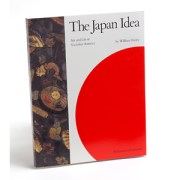
A book we picked up at the Wadworth Atheneum has been my introduction to art from Japan and the fascination Victorians had with the formerly isolated nation in the 1870s.
Japanese ports were closed to all but a few Dutch and Chinese traders for nearly two centuries. That changed in 1854 after a few months of negotiations between Commodore Matthew C. Perry and Japanese officials. March 31 of that year was a date that bring great change to the island nation and American living rooms.
It would to me with my limited exposure that while there may have been a great interest in Japanese design, the elements and behaviors that made up the Japanese lifestyle did not translate well. Take for example this photo of a Japanese room, then compare it to William H. Vanderbilt’s Japanese roomfound on page 116 of The Japan Idea by William Hosley.
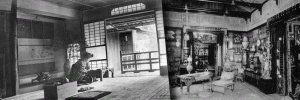
- Traditional Japanese Room and William H. Vanderbilt’s Japan Room
When signing the treaty, Perry gave many gifts to the imperial commissioners including double-elephant folio engravings of John James Audubon’s Birds of America. The gift was one of a few from the Americans to center on art. Art was the gift of the Japanese, America’s presents focused on technological ingenuity and innovation. If the Audubon prints were not entirely appreciated (they were later said to be found lying in mildew, dust and neglect), the gift of art by the Japanese would take America by storm.
“The Japanophiles were romantics,” Holsley writes. “Even the scientists among them were motivated by an aversion to modern life and the aching desire to reform the standards of art and society.” It’s perhaps worth noting here that the craze had the opposite effect on Japan.” But those were the people who actually thought about it. Consumers and decorators just as often as today get swept up in a look. Japanese was in the zeitgeist.
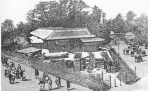
- Japanese Bazaar at the Philadelphia Exhibition
Japan was well represented at the 1876 Philadelphia Exhibition. Like in Vanderbilt’s room, cases in Philadelphia were stuffed elaborate Japanese wares. The tradition crafts methods employed in Japan would begin to change toward a western-style division of labor. Items that had no use in a Japanese home, letter openers, calling card carriers and writing desks were also on display.
Museums curators also collected large amounts of Japanese art during this time, curiously most of which has since been de-accessioned.
It seems to me the influence of Japanese art on America is still well-represented in museums. Closest to me in a room in the Brooklyn museum where paintings by William Merit Chase and furniture by Herter Brothers is on display. The Metropolitan Museum of Art in New York apparently has the largest amount of Japanese art collected in Victorian times. I’d also like to note a painting on view in the Museum of Fine Arts, Boston. It’s by Monet and seems to clearly depict the Victorian fascination with all things Japanese.





Leave a comment